Browse · MathNet
PrintIMO2024 Shortlisted Problems
2024 geometry
Problem
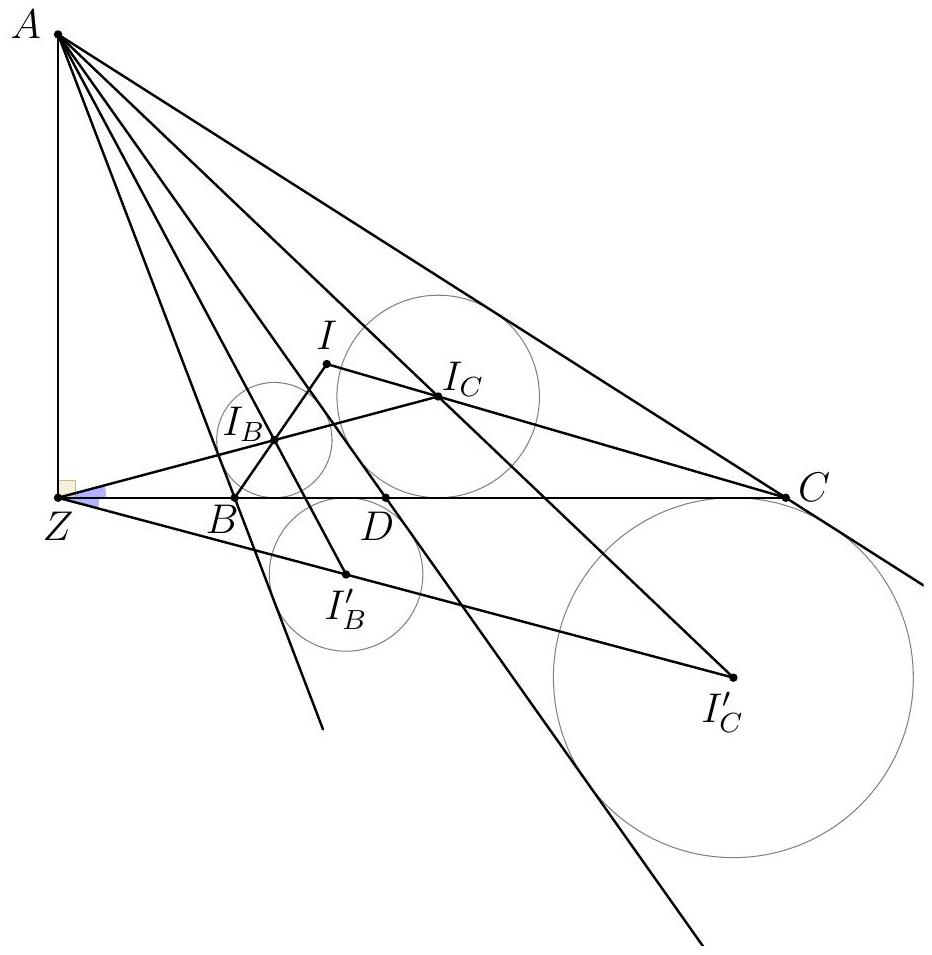
Let be a triangle with , and let be a point in the interior of segment . Let be a point on the circumcircle of triangle such that and lie on opposite sides of line and . Let , and be the incentres of triangles , and , respectively. Prove that , and are concyclic if and only if , and concur.
Solution
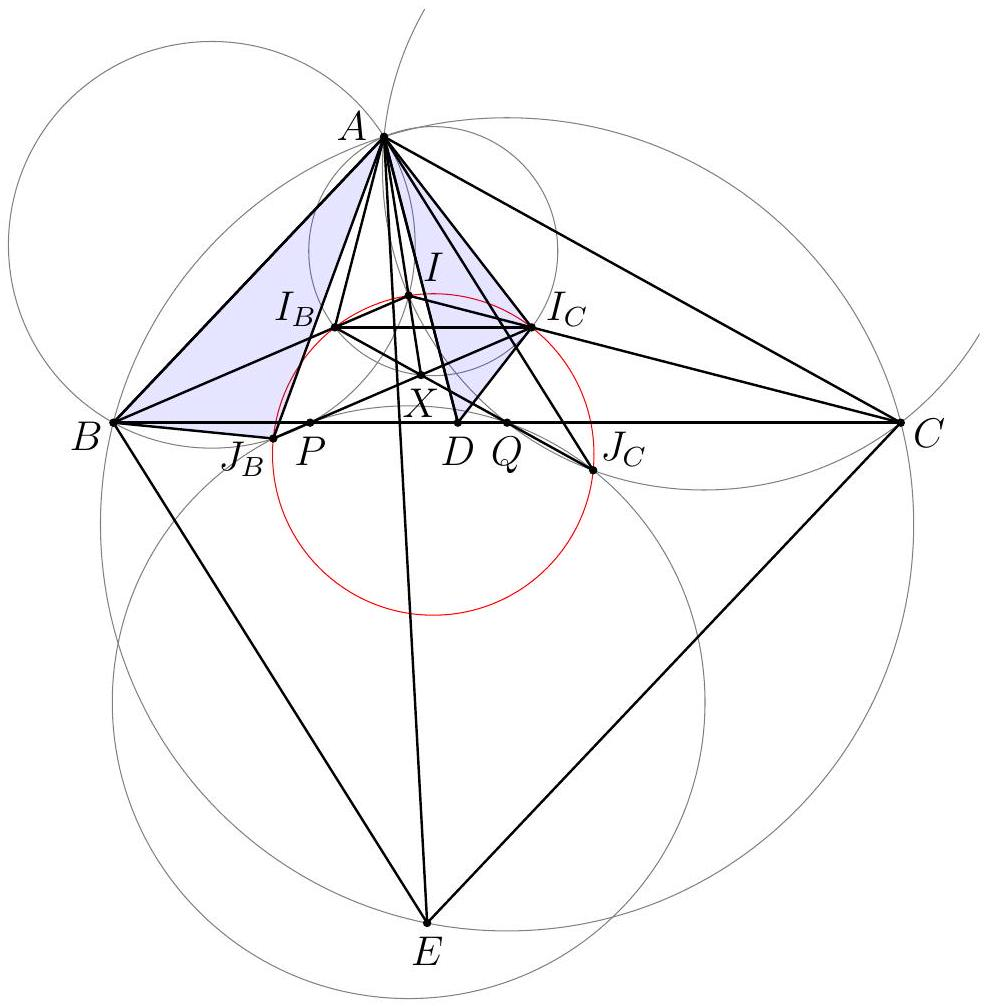
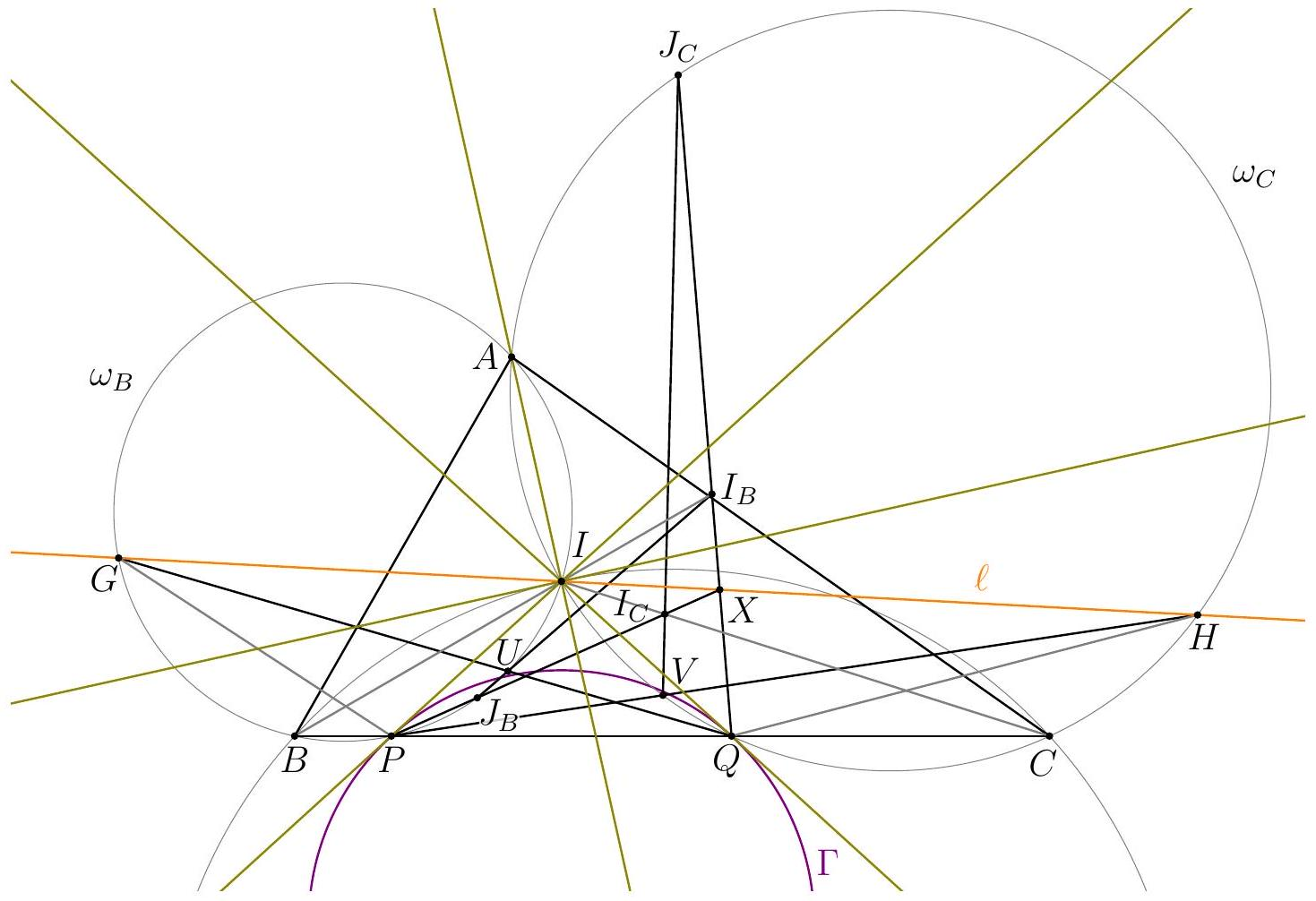
Let be the intersection of and . We will prove that, provided that , the following two conditions are equivalent: (1) bisects ; (2) , and are concyclic. Let circles and meet again at and , respectively. Note that and because the centres of circles and lie on and , respectively. Thus, , and are collinear in this order as by the triangle inequality.
Claim 1. Points , and are collinear, and points , and are collinear.
Proof. We have that so is cyclic. As is the centre of spiral similarity between and , it is also the centre of spiral similarity between and . Hence, is the Miquel point of self-intersecting quadrilateral , so lies on . Analogously, we have that lies on .
Throughout the rest of the solution, we will use directed angles.
Proof of (1) (2). We assume that (1) holds. Claim 1 and the similarities and tell us that so is cyclic. Also, as , we have that Using these, we have that so . Hence, so is cyclic. Analogously, we have that is cyclic, so is cyclic, thus proving (2).
Proof of (2) (1). We assume that (2) holds.
Claim 2. Circles , and are tangent at .
Proof. Using the cyclic quadrilateral , we have that As , and are collinear, the tangents to circles and at coincide, so circles and are tangent at . Analogously, circles and are tangent at , so all three circles are tangent at .
Claim 3. Point lies on circle .
Proof. Suppose that does not lie on circle . Then the circles , and are distinct. We apply the radical axis theorem to these three circles. By Claim 2, the radical axis of circles and is the tangent to circle at . As and intersect at , must be tangent to circle .
However, by Claim 1 we have that is the intersection of and . As lies on the interior of segment , lies on the interior of segment and lies on the interior of segment . Hence, , and all lie on the perimeter of triangle in this order, so must be in the interior of triangle . This means that cannot be tangent to circle , so must lie on circle .
By Claims 2 and 3, circles and are tangent, so . Since is cyclic, we have that so is cyclic. By the radical axis theorem on circles , and , we have that , and concur at , thus proving (1).
---
Alternative solution.
Let be the intersection of and . As in Solution 1, we will prove that conditions (1) and (2) are equivalent. To do so, we introduce the new condition: (3) and show that (3) is equivalent to both (1) and (2), provided that . Note that and , where denotes positive similarity. We will make use of the following fact.
Fact. For points , and , the positive similarities are equivalent.
Proof of (1) (3). Let and meet at and , respectively. Let meet at , meet at , and and meet at .
Claim 1. Line bisects .
Proof. Let be the intersection of and the bisector of . As also bisects . Hence, is the foot of the bisector of in triangle . Using the Fact, we have that As lies on , we have that lies on , so and bisects .
We show that lies on if and only if , which implies the equivalence of (1) and (3) by Claim 1. Let meet and at and , respectively. As and are similar, we have that , so . Analogously, we have that . Hence, and coincide with if and only if which is equivalent to .
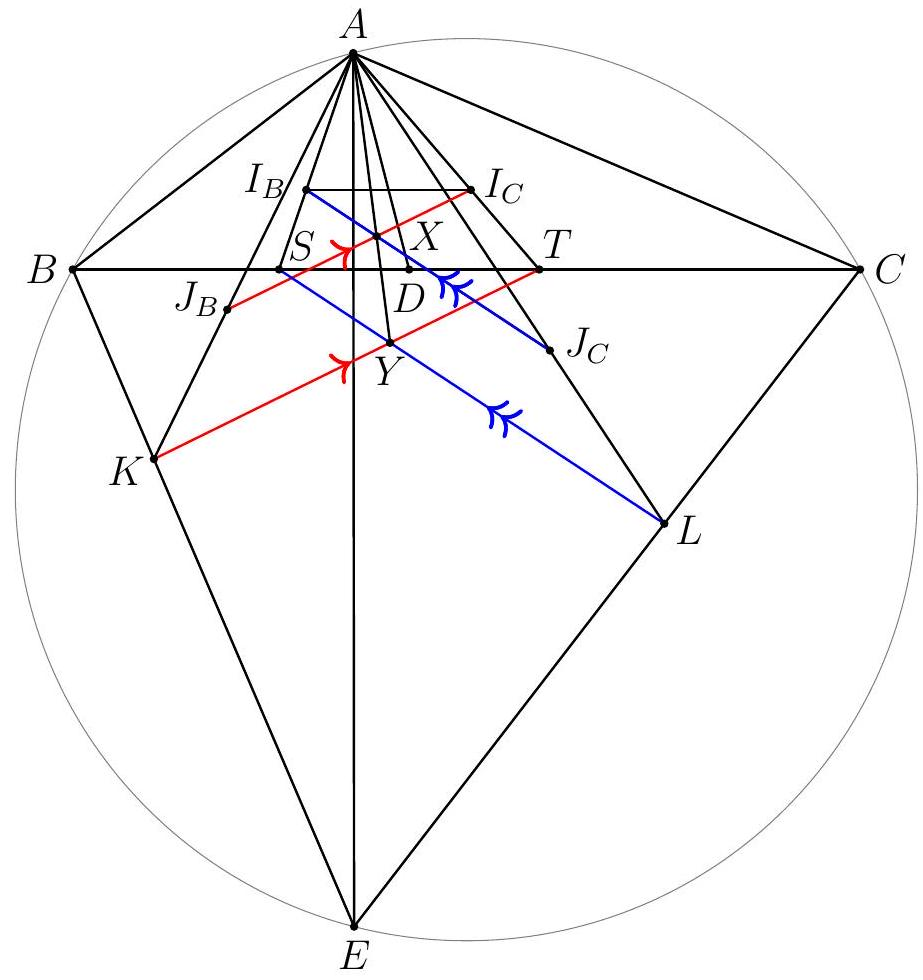
Proof of (2) (3). Let and meet circle at and , respectively, and let and be the -excentres of and , respectively.
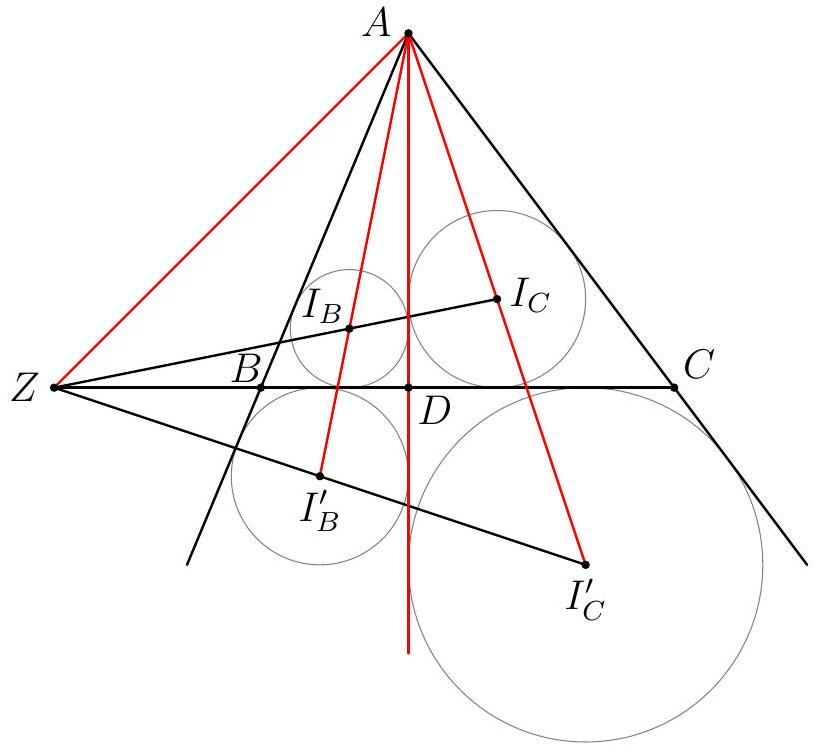
Claim 2. Lines , and are concurrent or pairwise parallel.
Proof. We work in the projective plane. Let and meet at and , respectively. Note that is the intersection of the external common tangents of the incircles of and and is a common internal tangent of the incircles of and , so . Applying the same argument to the -excircles of and gives , which means that . Thus, , and concur, possibly at infinity.
Claim 3. Lines and are parallel, and lines and are parallel.
Proof. Using the Fact, we have that Thus, , so . Similarly, we have that .
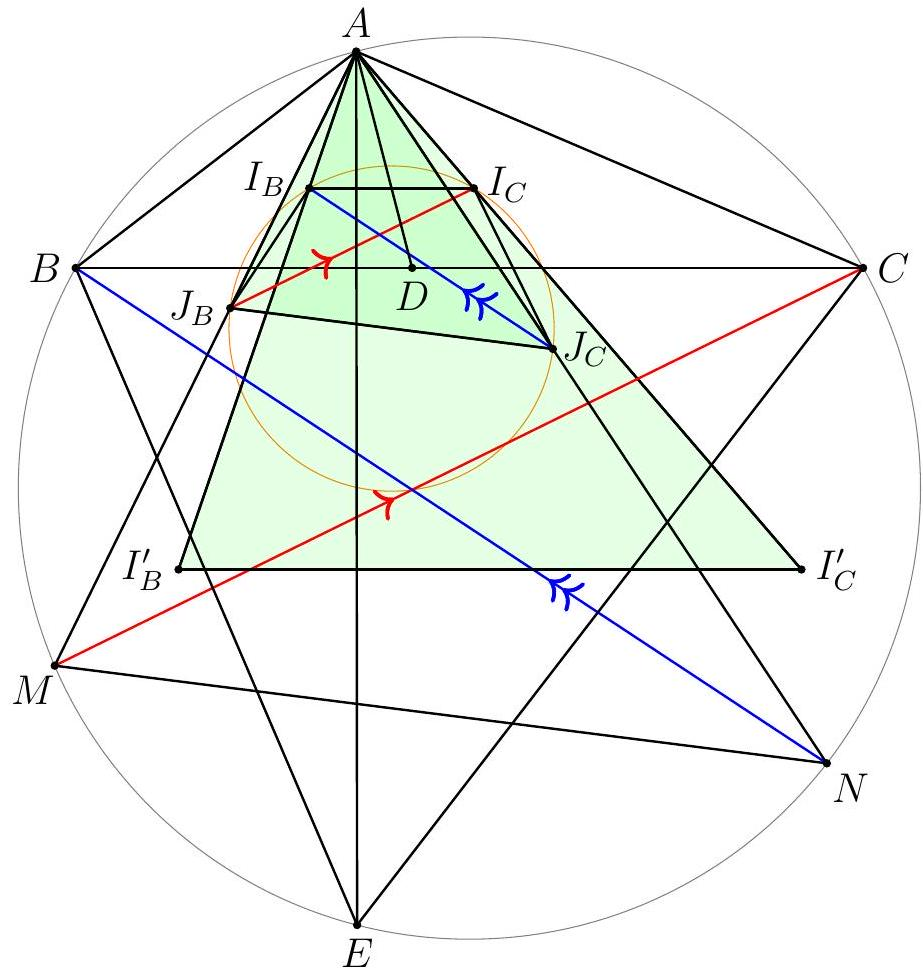
Claim 4. The centre of spiral similarity between and is .
Proof. As and are respectively the incentre and -excentre of triangle , we have that . Using the similarity , this means that , so and . Similarly, we have that and . Together, these imply that and , so .
We proceed using directed angles. By Claim 3, we have that is cyclic if and only if By Claim 4, we have that which is equivalent to . Thus, is cyclic if and only if Suppose that is parallel to . By Claim 2, is also parallel to , so we have that . Thus, () is satisfied, so is cyclic.
Suppose now that is not parallel to while is cyclic. By Claim 2, , , and concur at a point . As and lie on segments and , must lie outside segment . Since is the intersection of the common external tangents of the incircle and -excircle of and is a common internal tangent of the incircle and -excircle of , we have that . By (), bisects , so : that is, is the foot from to . But this implies that or is obtuse, contradicting the fact that .
---
Alternative solution.
Let and denote circles and , respectively. Introduce and as in Solution 1 and recall from Claim 1 in Solution 1 that and are collinear with lying on . From this, we can define and in terms of by and as the second intersection of line with . Similarly, we can define and as the second intersection of line with . Note that this now detaches the definitions of points , and from points and .
Let be a line passing through . We now allow to vary along while fixing and points , and . We use the definitions from above to construct , and . We will classify all cases where these four points are concyclic. Throughout the rest of the solution we use directed angles and directed lengths.
For nondegeneracy reasons, we exclude cases where and lies on line , which means that and . We also exclude the cases where is tangent to either or . Similar results hold in these cases and they can be treated as limit cases.
Claim 1. Line passes through a fixed point on , and line passes through a fixed point on as varies on .
Proof. Let be the second intersection of with . We have by the law of sines that We also have Combining these and applying Ceva's Theorem in with point , we get which is independent of the choice of on . As is fixed, this is enough to show point is fixed on .
Similarly, if we define to be the second intersection of with , we get that is fixed on .
Let and be the second intersections of with and , respectively which exist as we are assuming is not tangent to either or .
Claim 2. Points and are collinear and points and are collinear.
Proof. Taking , we have and . Both of these points lie on line which, by Claim 1, shows that are collinear. Similarly, are collinear.
Claim 3. Points are concyclic if and only if points are concyclic. In particular, this depends only on , not on the choice of on .
Proof. We have that Thus which proves the claim.
Claim 4. are concyclic if and only if where is the tangent to circle at .
Proof. When , we have so the cyclic condition from Claim 3 holds. Similarly, when or , or , respectively, so again the cyclic condition holds.
Now, consider the case where . In this case it is straightforward to see that the four points , and are distinct. We then have that , so We also have that , so Hence, in this case are concyclic if and only if is tangent to circle , as claimed.
We now revert to using points and to define points , and , returning to the original set-up.
Claim 5. Let be the circle passing through and that is tangent to and , which exists as . Then lies on . Furthermore, lies on the same side of as and does not lie on line .
Proof. We have that so circle is tangent to . Similarly, circle is tangent to , so lies on .
As lies in the interior of segment , lies in the interior of segment . Since is the second intersection of with and is tangent to , lies in the interior of on on the same side of as . This implies the second part of the claim.
By Claim 5, we cannot have in the original problem. Furthermore, as shown in Claim 2 of Solution 1, we have that lies inside triangle , which means that . Thus, the only remaining possibility in Claim 4 is . We then have finishing the problem.
Claim 1. Points , and are collinear, and points , and are collinear.
Proof. We have that so is cyclic. As is the centre of spiral similarity between and , it is also the centre of spiral similarity between and . Hence, is the Miquel point of self-intersecting quadrilateral , so lies on . Analogously, we have that lies on .
Throughout the rest of the solution, we will use directed angles.
Proof of (1) (2). We assume that (1) holds. Claim 1 and the similarities and tell us that so is cyclic. Also, as , we have that Using these, we have that so . Hence, so is cyclic. Analogously, we have that is cyclic, so is cyclic, thus proving (2).
Proof of (2) (1). We assume that (2) holds.
Claim 2. Circles , and are tangent at .
Proof. Using the cyclic quadrilateral , we have that As , and are collinear, the tangents to circles and at coincide, so circles and are tangent at . Analogously, circles and are tangent at , so all three circles are tangent at .
Claim 3. Point lies on circle .
Proof. Suppose that does not lie on circle . Then the circles , and are distinct. We apply the radical axis theorem to these three circles. By Claim 2, the radical axis of circles and is the tangent to circle at . As and intersect at , must be tangent to circle .
However, by Claim 1 we have that is the intersection of and . As lies on the interior of segment , lies on the interior of segment and lies on the interior of segment . Hence, , and all lie on the perimeter of triangle in this order, so must be in the interior of triangle . This means that cannot be tangent to circle , so must lie on circle .
By Claims 2 and 3, circles and are tangent, so . Since is cyclic, we have that so is cyclic. By the radical axis theorem on circles , and , we have that , and concur at , thus proving (1).
---
Alternative solution.
Let be the intersection of and . As in Solution 1, we will prove that conditions (1) and (2) are equivalent. To do so, we introduce the new condition: (3) and show that (3) is equivalent to both (1) and (2), provided that . Note that and , where denotes positive similarity. We will make use of the following fact.
Fact. For points , and , the positive similarities are equivalent.
Proof of (1) (3). Let and meet at and , respectively. Let meet at , meet at , and and meet at .
Claim 1. Line bisects .
Proof. Let be the intersection of and the bisector of . As also bisects . Hence, is the foot of the bisector of in triangle . Using the Fact, we have that As lies on , we have that lies on , so and bisects .
We show that lies on if and only if , which implies the equivalence of (1) and (3) by Claim 1. Let meet and at and , respectively. As and are similar, we have that , so . Analogously, we have that . Hence, and coincide with if and only if which is equivalent to .
Proof of (2) (3). Let and meet circle at and , respectively, and let and be the -excentres of and , respectively.
Claim 2. Lines , and are concurrent or pairwise parallel.
Proof. We work in the projective plane. Let and meet at and , respectively. Note that is the intersection of the external common tangents of the incircles of and and is a common internal tangent of the incircles of and , so . Applying the same argument to the -excircles of and gives , which means that . Thus, , and concur, possibly at infinity.
Claim 3. Lines and are parallel, and lines and are parallel.
Proof. Using the Fact, we have that Thus, , so . Similarly, we have that .
Claim 4. The centre of spiral similarity between and is .
Proof. As and are respectively the incentre and -excentre of triangle , we have that . Using the similarity , this means that , so and . Similarly, we have that and . Together, these imply that and , so .
We proceed using directed angles. By Claim 3, we have that is cyclic if and only if By Claim 4, we have that which is equivalent to . Thus, is cyclic if and only if Suppose that is parallel to . By Claim 2, is also parallel to , so we have that . Thus, () is satisfied, so is cyclic.
Suppose now that is not parallel to while is cyclic. By Claim 2, , , and concur at a point . As and lie on segments and , must lie outside segment . Since is the intersection of the common external tangents of the incircle and -excircle of and is a common internal tangent of the incircle and -excircle of , we have that . By (), bisects , so : that is, is the foot from to . But this implies that or is obtuse, contradicting the fact that .
---
Alternative solution.
Let and denote circles and , respectively. Introduce and as in Solution 1 and recall from Claim 1 in Solution 1 that and are collinear with lying on . From this, we can define and in terms of by and as the second intersection of line with . Similarly, we can define and as the second intersection of line with . Note that this now detaches the definitions of points , and from points and .
Let be a line passing through . We now allow to vary along while fixing and points , and . We use the definitions from above to construct , and . We will classify all cases where these four points are concyclic. Throughout the rest of the solution we use directed angles and directed lengths.
For nondegeneracy reasons, we exclude cases where and lies on line , which means that and . We also exclude the cases where is tangent to either or . Similar results hold in these cases and they can be treated as limit cases.
Claim 1. Line passes through a fixed point on , and line passes through a fixed point on as varies on .
Proof. Let be the second intersection of with . We have by the law of sines that We also have Combining these and applying Ceva's Theorem in with point , we get which is independent of the choice of on . As is fixed, this is enough to show point is fixed on .
Similarly, if we define to be the second intersection of with , we get that is fixed on .
Let and be the second intersections of with and , respectively which exist as we are assuming is not tangent to either or .
Claim 2. Points and are collinear and points and are collinear.
Proof. Taking , we have and . Both of these points lie on line which, by Claim 1, shows that are collinear. Similarly, are collinear.
Claim 3. Points are concyclic if and only if points are concyclic. In particular, this depends only on , not on the choice of on .
Proof. We have that Thus which proves the claim.
Claim 4. are concyclic if and only if where is the tangent to circle at .
Proof. When , we have so the cyclic condition from Claim 3 holds. Similarly, when or , or , respectively, so again the cyclic condition holds.
Now, consider the case where . In this case it is straightforward to see that the four points , and are distinct. We then have that , so We also have that , so Hence, in this case are concyclic if and only if is tangent to circle , as claimed.
We now revert to using points and to define points , and , returning to the original set-up.
Claim 5. Let be the circle passing through and that is tangent to and , which exists as . Then lies on . Furthermore, lies on the same side of as and does not lie on line .
Proof. We have that so circle is tangent to . Similarly, circle is tangent to , so lies on .
As lies in the interior of segment , lies in the interior of segment . Since is the second intersection of with and is tangent to , lies in the interior of on on the same side of as . This implies the second part of the claim.
By Claim 5, we cannot have in the original problem. Furthermore, as shown in Claim 2 of Solution 1, we have that lies inside triangle , which means that . Thus, the only remaining possibility in Claim 4 is . We then have finishing the problem.
Techniques
Triangle centers: centroid, incenter, circumcenter, orthocenter, Euler line, nine-point circleTangentsRadical axis theoremSpiral similarityMiquel pointCeva's theoremCyclic quadrilateralsPolar triangles, harmonic conjugatesAngle chasing