Browse · MathNet
Print51st IMO Shortlisted Problems
geometry
Problem
The vertices , , of an equilateral triangle lie respectively on the sides , , of an acute-angled triangle . Prove that the incenter of triangle lies inside triangle .
The vertices , , of an equilateral triangle lie respectively on the sides , , of a triangle . Prove that if the incenter of triangle lies outside triangle , then one of the angles of triangle is greater than .
The vertices , , of an equilateral triangle lie respectively on the sides , , of a triangle . Prove that if the incenter of triangle lies outside triangle , then one of the angles of triangle is greater than .
Solution
We will prove a stronger fact; namely, we will show that the incenter of triangle lies inside the incircle of triangle (and hence surely inside triangle itself). We denote by the distance between point and line .
Denote by the incenter of and by , , and the inradii of triangles , and the circumradius of , respectively. Then we have , and the desired inequality is . We assume that ; otherwise the claim is trivial.
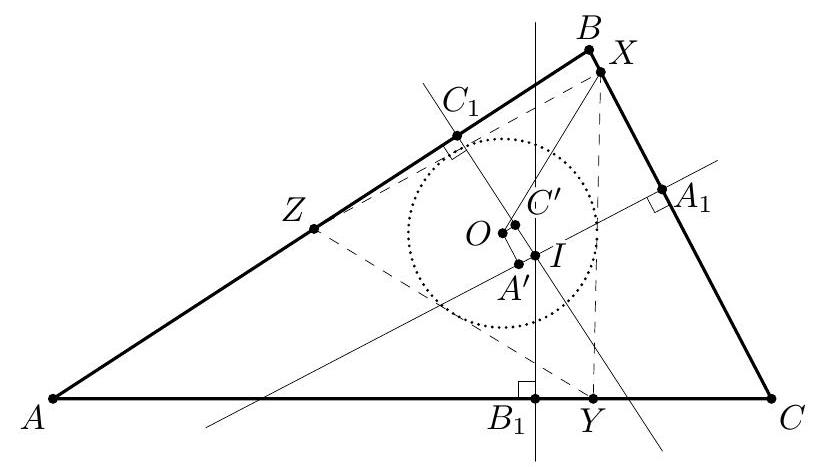
Let the incircle of touch its sides , , at points , , respectively. The lines , , cut the plane into 6 acute angles, each one containing one of the points , , on its border. We may assume that lies in an angle defined by lines , and containing point (see Fig. 1). Let and be the projections of onto lines and , respectively.
Since , we have . Since , it follows that , or . On the other hand, the incircle of lies inside , hence , and analogously we get , or .
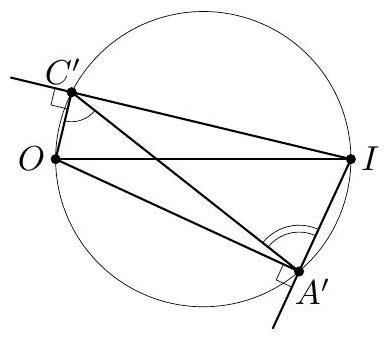
Fig. 1 Fig. 2
Finally, the quadrilateral is circumscribed due to the right angles at and (see Fig. 2). On its circumcircle, we have , hence . This means that . Finally, we have , as desired.
---
Alternative solution.
Assume the contrary. Then the incenter should lie in one of triangles , , - assume that it lies in . Let the incircle of touch sides , at point , respectively. Without loss of generality, assume that point lies on segment . In this case we will show that thus leading to a contradiction.
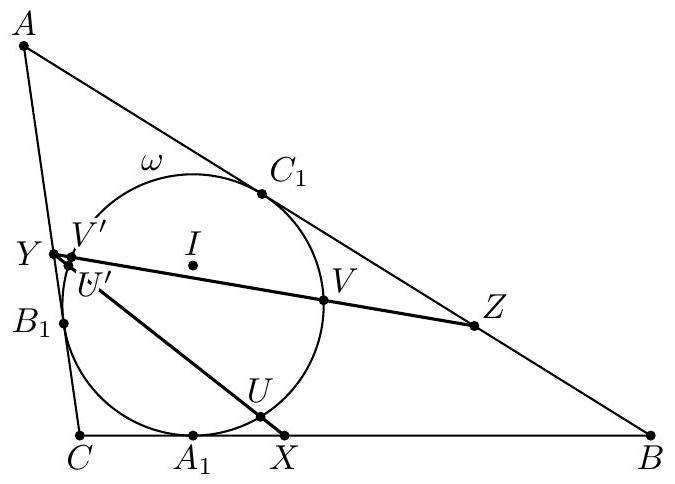
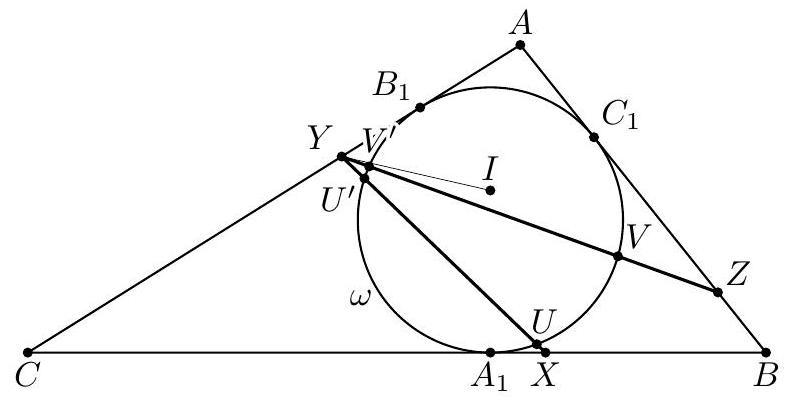
Note that intersects each of the segments and at two points; let , , and , be the points of intersection of with and , respectively (, ; see Figs. 3 and 4). Note that , hence .
On the other hand, since lies in , we get , hence .
Now, two cases are possible due to the order of points , on segment .
Fig. 3 Fig. 4
Case 1. Let point lie on the segment (see Fig. 3). Then we have ; analogously, we get . Therefore, , as desired.
Case 2. Now let point lie on the segment (see Fig. 4). Analogously, we obtain . Next, , but , since is a tangent and is a secant line to circle from point . Hence, we get , hence , as desired.
---
Alternative solution.
Assume the contrary. As in Solution 2, we assume that the incenter of lies in , and the tangency point of and lies on segment . Surely, , hence points and lie on one side of the perpendicular bisector to ; therefore . Moreover, intersects segment at two points, and therefore the projection of onto lies on the segment . In this case, we will prove that .
Denote by the incenter of and by , , and the inradii of triangles , and the circumradius of , respectively. Then we have , and the desired inequality is . We assume that ; otherwise the claim is trivial.
Let the incircle of touch its sides , , at points , , respectively. The lines , , cut the plane into 6 acute angles, each one containing one of the points , , on its border. We may assume that lies in an angle defined by lines , and containing point (see Fig. 1). Let and be the projections of onto lines and , respectively.
Since , we have . Since , it follows that , or . On the other hand, the incircle of lies inside , hence , and analogously we get , or .
Fig. 1 Fig. 2
Finally, the quadrilateral is circumscribed due to the right angles at and (see Fig. 2). On its circumcircle, we have , hence . This means that . Finally, we have , as desired.
---
Alternative solution.
Assume the contrary. Then the incenter should lie in one of triangles , , - assume that it lies in . Let the incircle of touch sides , at point , respectively. Without loss of generality, assume that point lies on segment . In this case we will show that thus leading to a contradiction.
Note that intersects each of the segments and at two points; let , , and , be the points of intersection of with and , respectively (, ; see Figs. 3 and 4). Note that , hence .
On the other hand, since lies in , we get , hence .
Now, two cases are possible due to the order of points , on segment .
Fig. 3 Fig. 4
Case 1. Let point lie on the segment (see Fig. 3). Then we have ; analogously, we get . Therefore, , as desired.
Case 2. Now let point lie on the segment (see Fig. 4). Analogously, we obtain . Next, , but , since is a tangent and is a secant line to circle from point . Hence, we get , hence , as desired.
---
Alternative solution.
Assume the contrary. As in Solution 2, we assume that the incenter of lies in , and the tangency point of and lies on segment . Surely, , hence points and lie on one side of the perpendicular bisector to ; therefore . Moreover, intersects segment at two points, and therefore the projection of onto lies on the segment . In this case, we will prove that .
Techniques
Triangle centers: centroid, incenter, circumcenter, orthocenter, Euler line, nine-point circleTangentsCyclic quadrilateralsAngle chasingDistance chasing