Browse · harp
Printsmc
algebra senior
Problem
The graph of the function is shown below. How many solutions does the equation have? 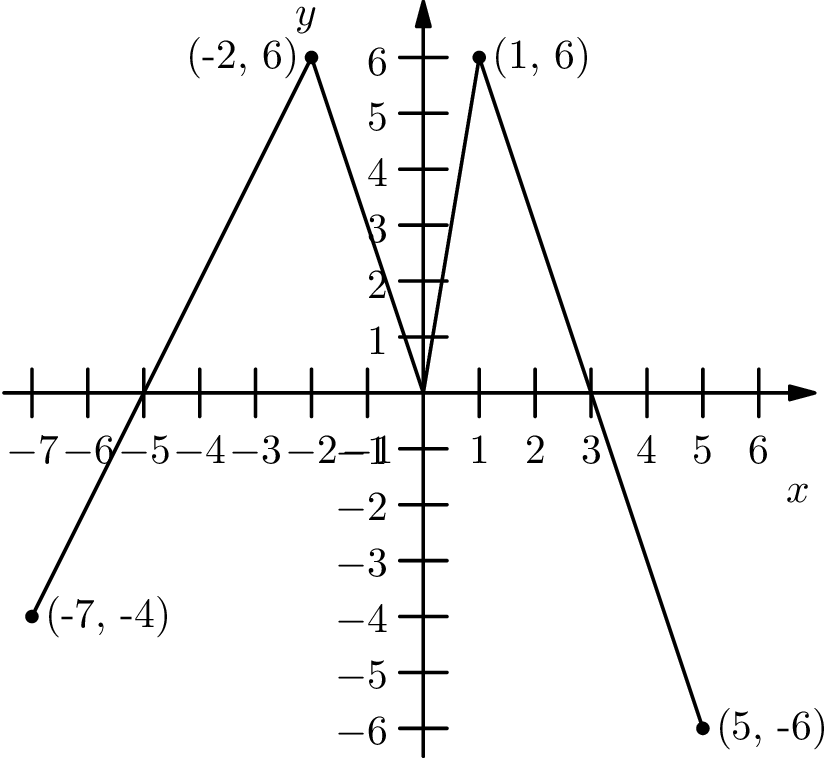
(A)
(B)
(C)
(D)
Solution
First of all, note that the equation has two solutions: and . Given an , let . Obviously, to have , we need to have , and we already know when that happens. In other words, the solutions to are precisely the solutions to ( or ). Without actually computing the exact values, it is obvious from the graph that the equation has two and has four different solutions, giving us a total of solutions.
Final answer
D