Browse · MathNet
PrintAPMO
geometry
Problem
Show that for every integer , there exists a convex hexagon which can be dissected into exactly congruent triangles.
Solution
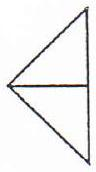
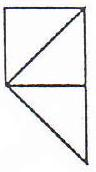
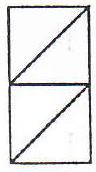
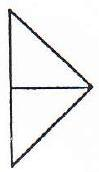
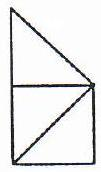
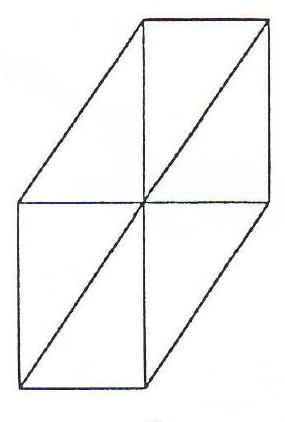
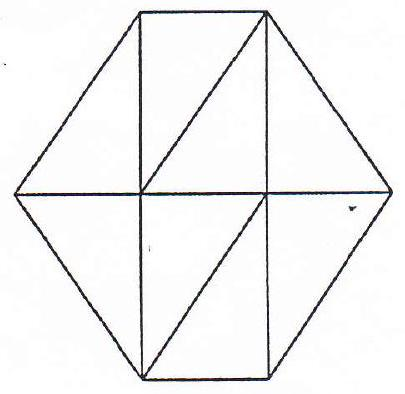
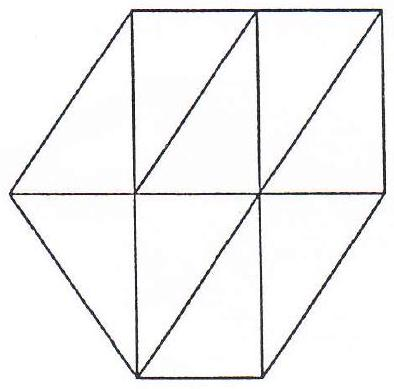
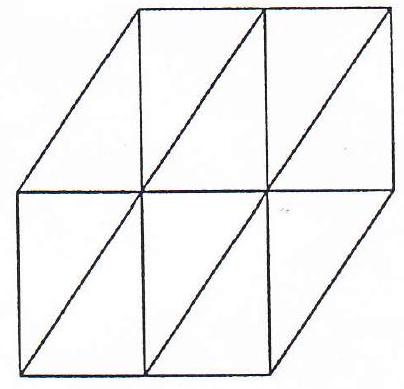
The basic building blocks will be right angled triangles with sides (which are positive integers) adjacent to the right angle. In the first instance, we take and construct five basic building blocks: and .
M
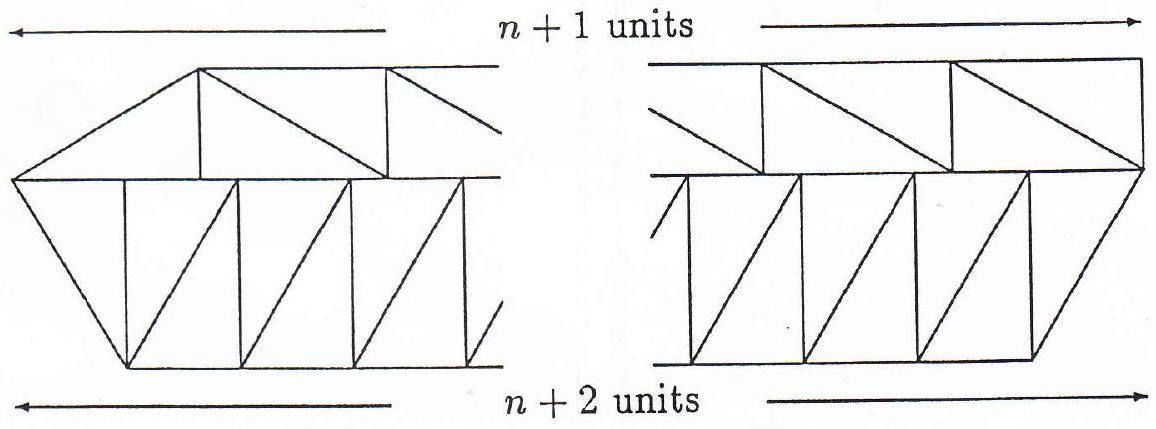
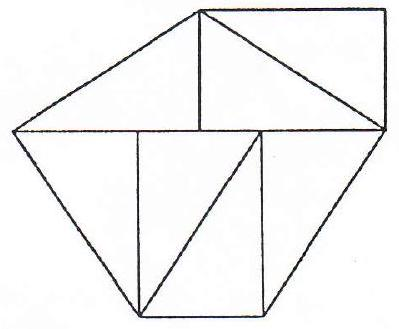
We shall now build convex hexagons by taking, on the left, one of the blocks , attaching copies of the block , and finally attaching one of the blocks . We must therefore exclude the case when for this does not generate a hexagon. Further, for or , we require that , whereas for , we only need require that .
Thus, with the obvious interpretation: gives a convex hexagon containing congruent triangles; gives a convex hexagon containing congruent triangles; and gives a convex hexagon containing congruent triangles, or congruent triangles.
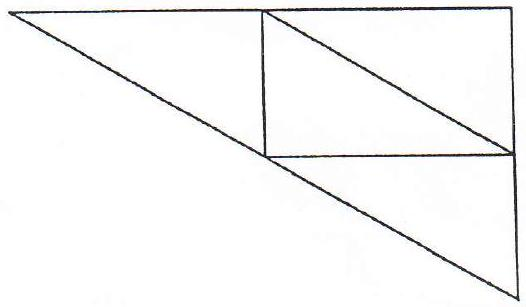
We shall now modify the lengths of the sides of the right triangle to obtain the case of congruent triangles.
So we have triangles in the top part and triangles in the bottom part. In order to match, we need so we take
---
Alternative solution.
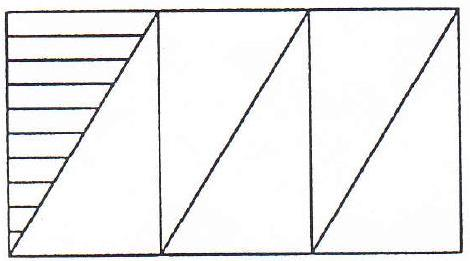
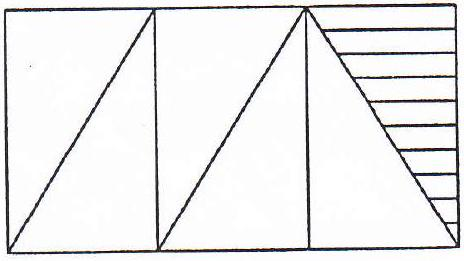
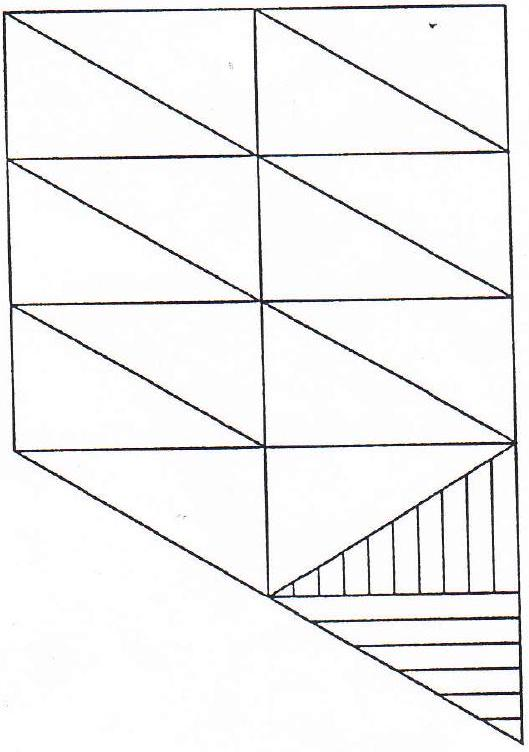
The basic building blocks will be right angled triangles with sides (which are positive integers) adjacent to the right angle. We construct an "UPPER CONFIGURATION", being a rectangle consisting of building block units of pairs of triangles with the side of length as base. This gives a base length of across the configuration. We further construct a "LOWER CONFIGURATION", being a triangle with base up, consisting along the base of building block units. Again, we have a base length of across the configuration. Two triangles in the upper configuration are shaded horizontally. One triangle in the lower configuration is also shaded horizontally. Another triangle in the lower configuration is shaded vertically.
Now consider the figure obtained by joining the two configurations along the base line of common length . To create the classes of hexagons defined below, it is necessary that both and . We create a class of convex hexagons (class 1) by omitting the three triangles that are shaded horizontally. The other class of convex hexagons (class 2) is obtained by omitting all shaded triangles.
Now count the total number of triangles in the full configuration. The upper configuration gives triangles. The lower configuration gives Thus the total number of triangles in a hexagon in class 1 is and the total number of triangle in a hexagon in class 2 is These, together with the restrictions on and , generate all positive integers greater than or equal to 11.
For the integers and , we give specific examples: 6 7 8 9 10 This completes the solution.
M
We shall now build convex hexagons by taking, on the left, one of the blocks , attaching copies of the block , and finally attaching one of the blocks . We must therefore exclude the case when for this does not generate a hexagon. Further, for or , we require that , whereas for , we only need require that .
Thus, with the obvious interpretation: gives a convex hexagon containing congruent triangles; gives a convex hexagon containing congruent triangles; and gives a convex hexagon containing congruent triangles, or congruent triangles.
We shall now modify the lengths of the sides of the right triangle to obtain the case of congruent triangles.
So we have triangles in the top part and triangles in the bottom part. In order to match, we need so we take
---
Alternative solution.
The basic building blocks will be right angled triangles with sides (which are positive integers) adjacent to the right angle. We construct an "UPPER CONFIGURATION", being a rectangle consisting of building block units of pairs of triangles with the side of length as base. This gives a base length of across the configuration. We further construct a "LOWER CONFIGURATION", being a triangle with base up, consisting along the base of building block units. Again, we have a base length of across the configuration. Two triangles in the upper configuration are shaded horizontally. One triangle in the lower configuration is also shaded horizontally. Another triangle in the lower configuration is shaded vertically.
Now consider the figure obtained by joining the two configurations along the base line of common length . To create the classes of hexagons defined below, it is necessary that both and . We create a class of convex hexagons (class 1) by omitting the three triangles that are shaded horizontally. The other class of convex hexagons (class 2) is obtained by omitting all shaded triangles.
Now count the total number of triangles in the full configuration. The upper configuration gives triangles. The lower configuration gives Thus the total number of triangles in a hexagon in class 1 is and the total number of triangle in a hexagon in class 2 is These, together with the restrictions on and , generate all positive integers greater than or equal to 11.
For the integers and , we give specific examples: 6 7 8 9 10 This completes the solution.
Techniques
Constructions and loci