Browse · MathNet
PrintInternational Mathematical Olympiad Shortlisted Problems
geometry
Problem
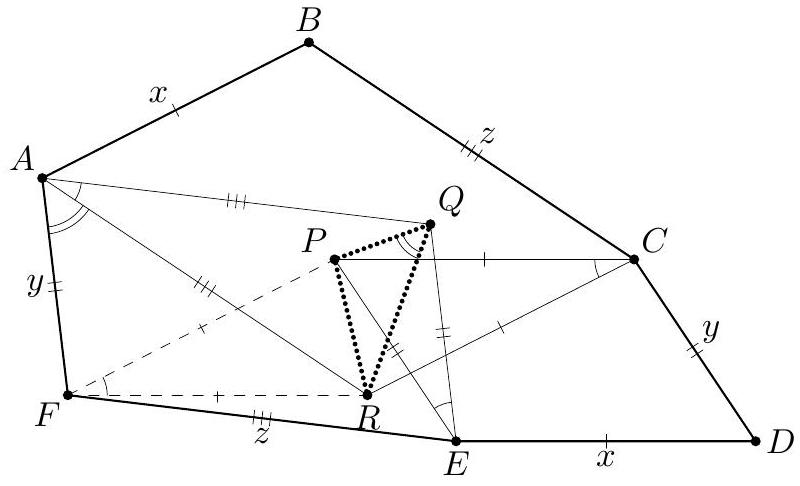
Let be a convex hexagon with , , , and . Prove that the diagonals , , and are concurrent.
Solution
In all three solutions, we denote and assume without loss of generality that .
Solution 1. Let , , . Consider the points , and such that the quadrilaterals , , and are parallelograms. We compute Similarly, .
If , since is isosceles, . Therefore , so is a parallelogram. Similarly, and are parallelograms. It follows that , and meet at their common midpoint.
Now assume . Since , , and are isosceles and have the same angle at the apex, we have with ratios of similarity . Thus Next, notice that and, using directed angles between rays, Thus . Since and , (1) then implies that . Similarly . Therefore is a rhombus.
We conclude that is the perpendicular bisector of . Similarly, is the perpendicular bisector of and is the perpendicular bisector of . It follows that , , and are concurrent at the circumcenter of .
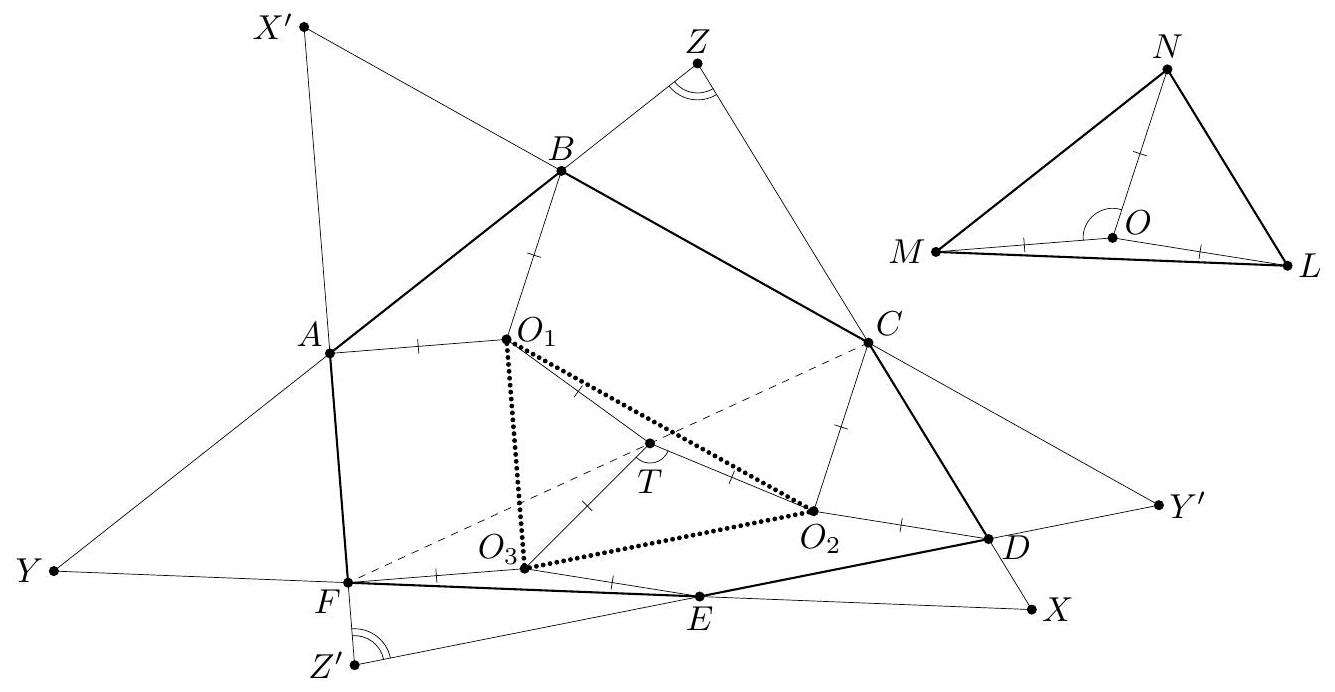
Solution 2. Let , , , , , and . From we get and , so and are respectively on the opposite sides of and from the hexagon. Similar conclusions hold for , and . Then and similarly and , so . Thus there is a rotation which sends to a triangle with sides parallel to . Since we have . Similarly, and . Therefore If is a rotation by , then any two opposite sides of our hexagon are equal and parallel, so the three diagonals meet at their common midpoint. Otherwise, we must have or else we would have two vectors with different directions whose sum is .
This allows us to consider a triangle with , , and . Let be the circumcenter of and consider the points such that , , and are translations of , , and , respectively. Since and are translations of , quadrilateral is a parallelogram and . Similarly, and . Therefore . Moreover, by means of the rotation one may check that these triangles have the same orientation.
Let be the circumcenter of . We claim that , , and meet at . Let us show that , , and are collinear. Notice that since they are all equal to the circumradius of . Therefore and are isosceles. Using directed angles between rays again, we get Also, and are the circumcenters of the congruent triangles and so we have . Since and are translations of and respectively, this implies Adding the three equations in (2) and (3) gives which implies that is on . Analogous arguments show that it is on and also. The desired result follows.
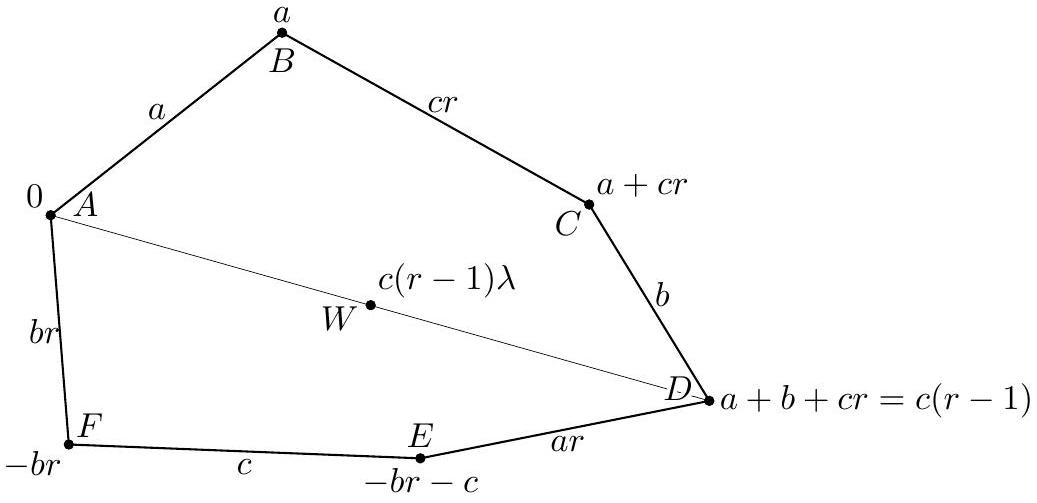
Solution 3. Place the hexagon on the complex plane, with at the origin and vertices labelled clockwise. Now represent the corresponding complex numbers. Also consider the complex numbers given by , , , , , and . Let . From and we get that and similarly and . It follows that , , and for a complex number with , as shown below.
We have If , then the hexagon is centrally symmetric and its diagonals intersect at its center of symmetry. Otherwise Therefore Now consider a point on given by the complex number , where is a real number with . Since , we have , so we can define . From we get Now, One easily checks that implies that since is not real. On the other hand, where in the last step we use that . We conclude that , and the desired result follows.
Solution 1. Let , , . Consider the points , and such that the quadrilaterals , , and are parallelograms. We compute Similarly, .
If , since is isosceles, . Therefore , so is a parallelogram. Similarly, and are parallelograms. It follows that , and meet at their common midpoint.
Now assume . Since , , and are isosceles and have the same angle at the apex, we have with ratios of similarity . Thus Next, notice that and, using directed angles between rays, Thus . Since and , (1) then implies that . Similarly . Therefore is a rhombus.
We conclude that is the perpendicular bisector of . Similarly, is the perpendicular bisector of and is the perpendicular bisector of . It follows that , , and are concurrent at the circumcenter of .
Solution 2. Let , , , , , and . From we get and , so and are respectively on the opposite sides of and from the hexagon. Similar conclusions hold for , and . Then and similarly and , so . Thus there is a rotation which sends to a triangle with sides parallel to . Since we have . Similarly, and . Therefore If is a rotation by , then any two opposite sides of our hexagon are equal and parallel, so the three diagonals meet at their common midpoint. Otherwise, we must have or else we would have two vectors with different directions whose sum is .
This allows us to consider a triangle with , , and . Let be the circumcenter of and consider the points such that , , and are translations of , , and , respectively. Since and are translations of , quadrilateral is a parallelogram and . Similarly, and . Therefore . Moreover, by means of the rotation one may check that these triangles have the same orientation.
Let be the circumcenter of . We claim that , , and meet at . Let us show that , , and are collinear. Notice that since they are all equal to the circumradius of . Therefore and are isosceles. Using directed angles between rays again, we get Also, and are the circumcenters of the congruent triangles and so we have . Since and are translations of and respectively, this implies Adding the three equations in (2) and (3) gives which implies that is on . Analogous arguments show that it is on and also. The desired result follows.
Solution 3. Place the hexagon on the complex plane, with at the origin and vertices labelled clockwise. Now represent the corresponding complex numbers. Also consider the complex numbers given by , , , , , and . Let . From and we get that and similarly and . It follows that , , and for a complex number with , as shown below.
We have If , then the hexagon is centrally symmetric and its diagonals intersect at its center of symmetry. Otherwise Therefore Now consider a point on given by the complex number , where is a real number with . Since , we have , so we can define . From we get Now, One easily checks that implies that since is not real. On the other hand, where in the last step we use that . We conclude that , and the desired result follows.
Techniques
Concurrency and CollinearityTriangle centers: centroid, incenter, circumcenter, orthocenter, Euler line, nine-point circleRotationTranslationComplex numbers in geometryVectorsAngle chasing