Browse · MathNet
Print58th Ukrainian National Mathematical Olympiad
Ukraine geometry
Problem
Is there a rectangle, that can be cut into 5 squares, among which there are two same ones, and all the other ones are distinct and differ from the same ones, and the same squares are 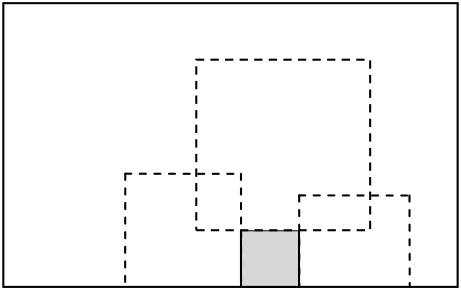 Fig. 33 a) the smallest of all; b) the biggest of all?
Solution
a) Let's show the corresponding example (Fig. 32).
b) Consider a square of the smallest size. It can not be on the border of the rectangle (Fig. 33), as well as it can not be inside of the border of one of the other squares. This means, that only the following arrangement of the other four squares around the smallest one (Fig. 34). But then, if is a side of the biggest square, then for the point not to be a vertex of the outer rectangle, it has to be inside the side, but then there must be a square with a side – this contradiction ends the proof.
b) Consider a square of the smallest size. It can not be on the border of the rectangle (Fig. 33), as well as it can not be inside of the border of one of the other squares. This means, that only the following arrangement of the other four squares around the smallest one (Fig. 34). But then, if is a side of the biggest square, then for the point not to be a vertex of the outer rectangle, it has to be inside the side, but then there must be a square with a side – this contradiction ends the proof.
Final answer
a) yes; b) no
Techniques
Constructions and lociColoring schemes, extremal arguments